Reimagining the PMO's Role as a Strategic Orchestrator of AI-Driven Transformation
For several decades, the Project Management Office (PMO) has established itself as the guarantor of operational rigor in organizations. It standardizes methodologies, tracks budgets and timelines, manages risks, and ensures that projects are delivered in accordance with commitments. Yet, at a time when artificial intelligence (AI) is redefining the modalities of decision-making, data analysis, and strategic anticipation, a fundamental question arises with growing urgency.
Should the PMO content itself with its traditional role as a project controller, or is it called upon to become the nerve center for steering AI within the enterprise?
This question is not merely academic. It directly touches upon the survival and relevance of the PMO function in a context of accelerated digital transformation. Organizations that still rely on a purely operational PMO risk missing a major lever of competitiveness. Conversely, those who dare to reinvent their PMO by orienting it toward value creation, strategic alignment, and predictive steering possess a decisive advantage.
This article explores this transformation in three parts: understanding what the PMO is today and its structural limitations, envisioning its evolution toward the Value Management Office (VMO), and examining how AI can and must be integrated into this trajectory of empowerment.
The Traditional PMO: Strengths and Limitations
What the PMO Does Well
The classic PMO was designed to respond to a specific organizational need: to bring coherence, method, and visibility to project management. Its raison d'être can be summed up in one sentence: to steer projects and execute them well.
Define and deploy project management methodologies and standards
Support and assist project managers in executing their missions
Track performance and produce necessary reporting
Manage risks, alerts, and escalations
Coordinate the project portfolio and manage dependencies
Facilitate governance and project committees
This operational value is real. It translates into greater method, visibility, control, and efficiency for project teams.
Structural Limitations of the Traditional Model
However, this model carries profound weaknesses that emerge particularly in a complex and rapidly changing environment. Four major dysfunctions characterize the traditional PMO:
Low visibility of value produced: The PMO reports on project progress but struggles to demonstrate how these projects contribute to the organization's strategic objectives.
Decisions made with partial data: Classic dashboards measure compliance indicators but do not capture the real value delivered or weak signals that would allow anticipating problems.
Disconnect between projects managed and value delivered: A project delivered on time and within budget is not necessarily a project that has created value.
Steering execution, not impact: The emphasis is on "how to do it" rather than "why do it" and its measurable results.
"Today, we steer execution... not impact."— Founding principle of PMO transformation toward VMO
PMO vs. VMO: Two Complementary Philosophies
Figure 1: PMO vs VMO Comparison
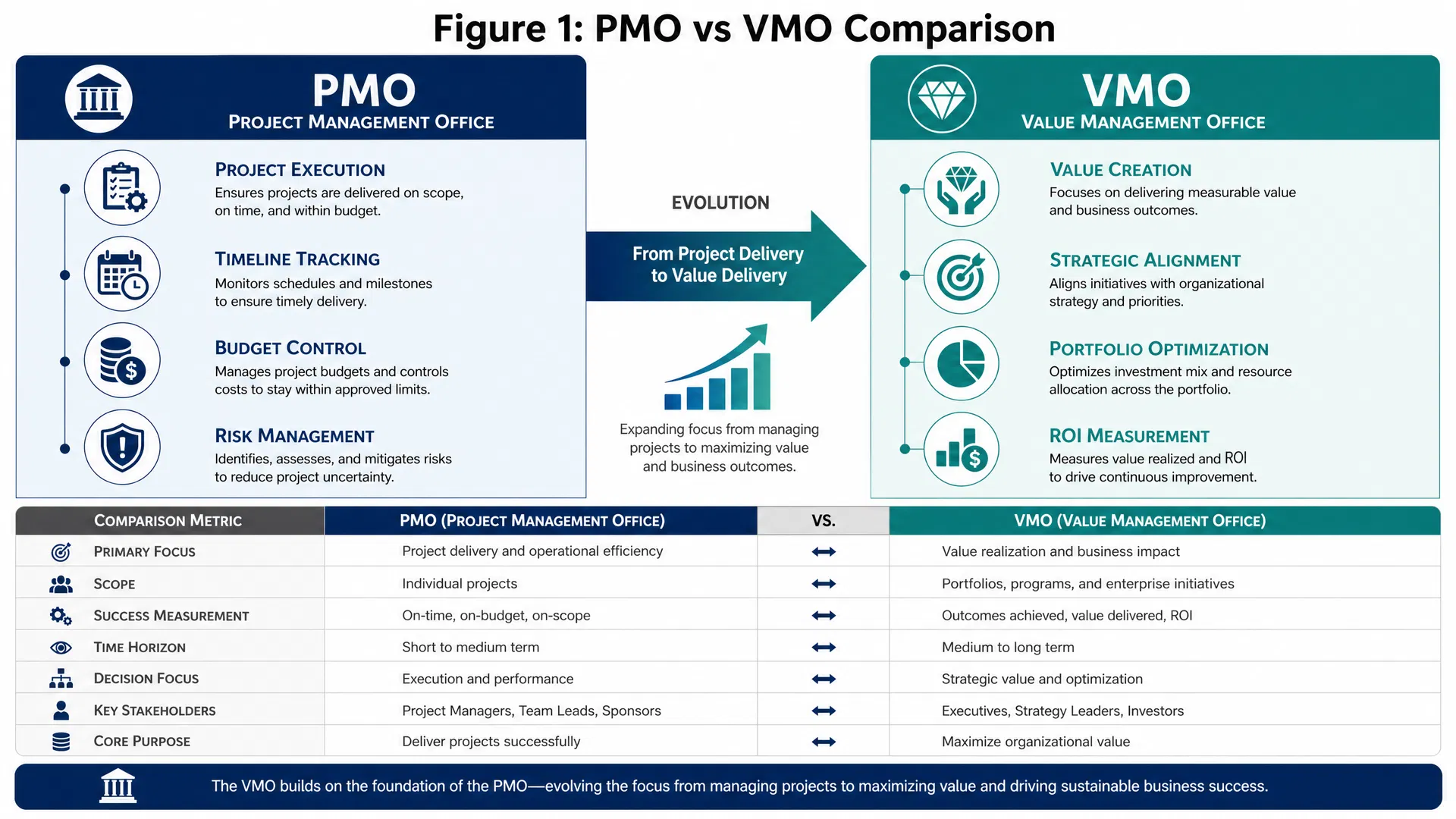
Faced with the limitations of the traditional PMO, the concept of Value Management Office (VMO) has emerged as a structured response. The VMO is not the successor to the PMO—it is its strategic evolution. Where the PMO asks "how will we execute our projects efficiently?", the VMO poses the prior and fundamental question: "which projects should we undertake to maximize value?"
The VMO in a Nutshell
The raison d'être of the VMO is to maximize sustainable value creation by aligning the project portfolio with enterprise strategy and stakeholder expectations. To do this, it relies on five key objectives:
Maximize value created—customer, financial, social, and strategic
Prioritize investments with the highest impact
Ensure alignment between strategy, projects, and expected results
Steer value end-to-end, from launch to benefit realization
Foster informed decision-making and organizational agility
| Aspect | PMO | VMO |
|---|---|---|
| Primary Focus | Efficient project execution | Value creation and strategic alignment |
| Key Question | Are we executing projects correctly? | Are we executing the projects that generate the most value? |
| Scope | Individual projects | Portfolio and strategic impact |
| Success Metrics | Cost, timeline, quality compliance | ROI, strategic impact, stakeholder satisfaction |
| Decision-Making | Operational and tactical | Strategic and value-driven |
The Transformation Tunnel: From Structure to Value
Figure 2: Transformation Tunnel - From Structure to Strategy
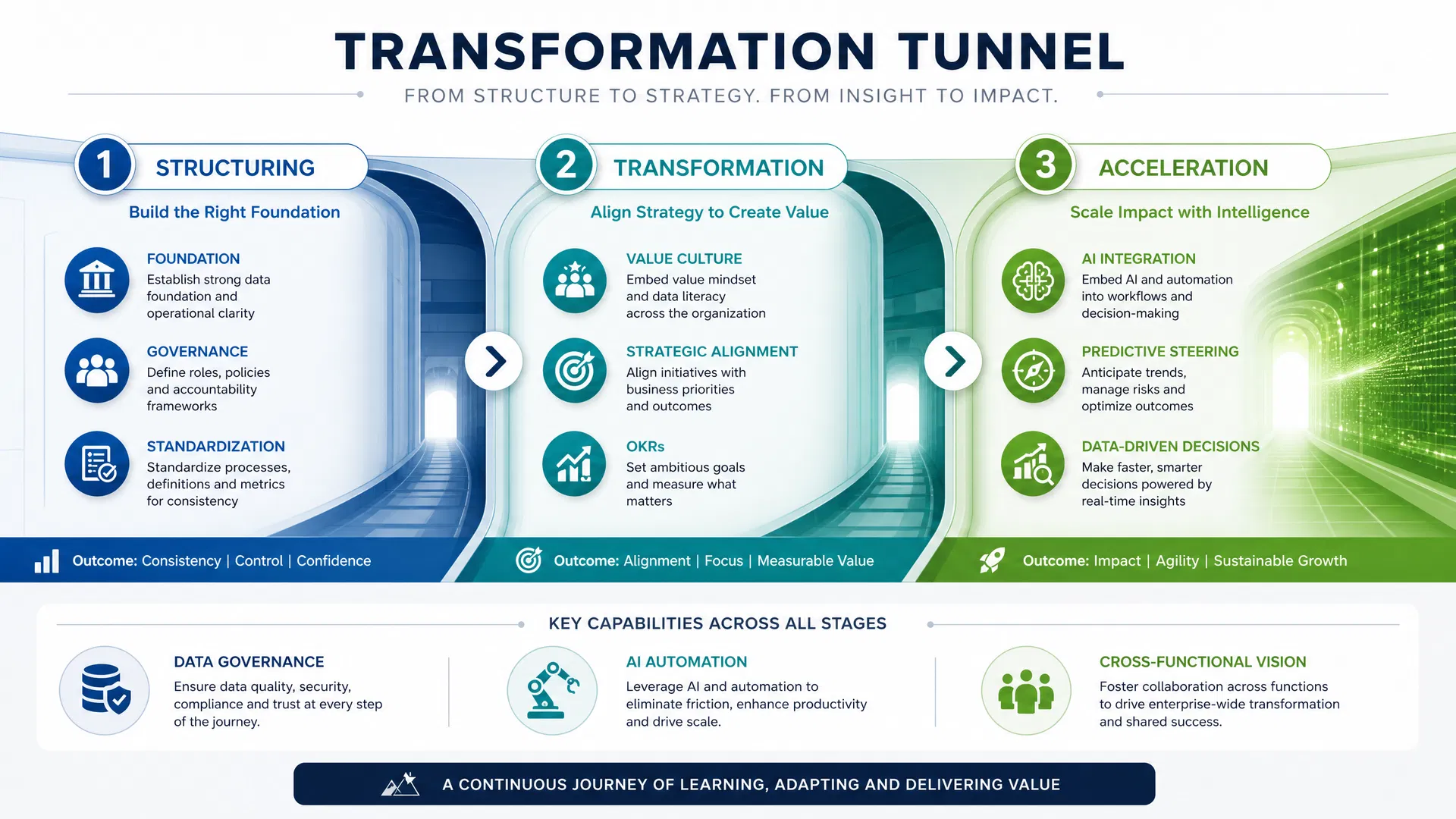
The transition from a traditional PMO toward a value-oriented VMO does not happen by chance. It follows a progressive path in three distinct major stages, each built on the achievements of the previous one.
Stage 1 — Structuring: Laying the Fundamentals
The first stage consists of consolidating and formalizing the foundations of project steering. This involves establishing robust governance, appropriate tools, and standardized methods. Without this solid foundation, any attempt to transform toward a value-oriented model will be weakened.
Stage 2 — Transformation: Developing a Culture of Value
The second stage is the most delicate because it touches behaviors and mindsets. It involves developing a cross-functional vision that transcends individual project boundaries, refining prioritization criteria to integrate strategic value, and aligning the entire portfolio with the organization's OKRs (Objectives and Key Results).
Stage 3 — Acceleration: Creating Sustainable Value Through AI
The third stage is where AI fully comes into play. Building on reliable and governed data, the VMO can integrate automation capabilities, predictive analysis, and AI-based decision support. Steering becomes proactive: we no longer suffer from deviations; we anticipate them.
Key message of transformation: "No longer just steering well... but steering what creates value." The compass of the traditional PMO gives way to the diamond of the VMO—value as the true north.
AI in Service of Steering: Challenges and Opportunities
Artificial intelligence profoundly transforms the tools and practices of project management. For the PMO in transition, it represents both an acceleration lever and an experimentation ground to invest in rapidly.
AI Use Cases for the PMO
Predictive risk analysis: Machine learning algorithms can identify patterns of deviations before project managers even become aware of them.
Intelligent portfolio prioritization: AI can help evaluate and compare projects according to their potential for value creation by integrating dozens of criteria simultaneously.
Reporting automation: Automatic generation of dashboards, reports, and summaries frees PMO teams from low-value-added tasks.
Scenario simulation: Generative AI tools allow modeling different portfolio arbitration scenarios and visualizing their impacts.
Realized value measurement: AI can consolidate heterogeneous data from multiple sources to calculate in real-time the value actually delivered by each project.
Conditions for Success
AI adoption by the PMO cannot be reduced to installing technological tools. Several prerequisites are essential:
Data quality: AI can only produce relevant insights from reliable, complete, and well-governed data.
Organizational maturity: Integrating AI into project steering requires sufficient maturity in management practices.
Posture transformation: "It's not a tool transformation... it's a posture transformation." AI will be underutilized if teams do not change their relationship with data, decision-making, and value.
The PMO as AI Steering Center: A Natural Evolution
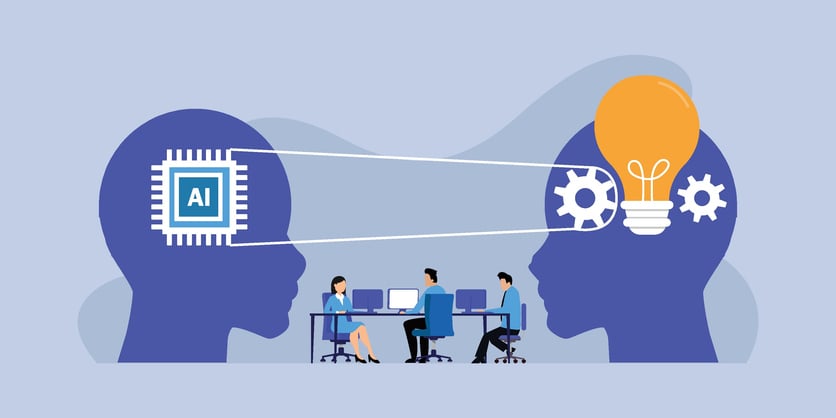
Figure 3: PMO - Time to Act, to Create More Value
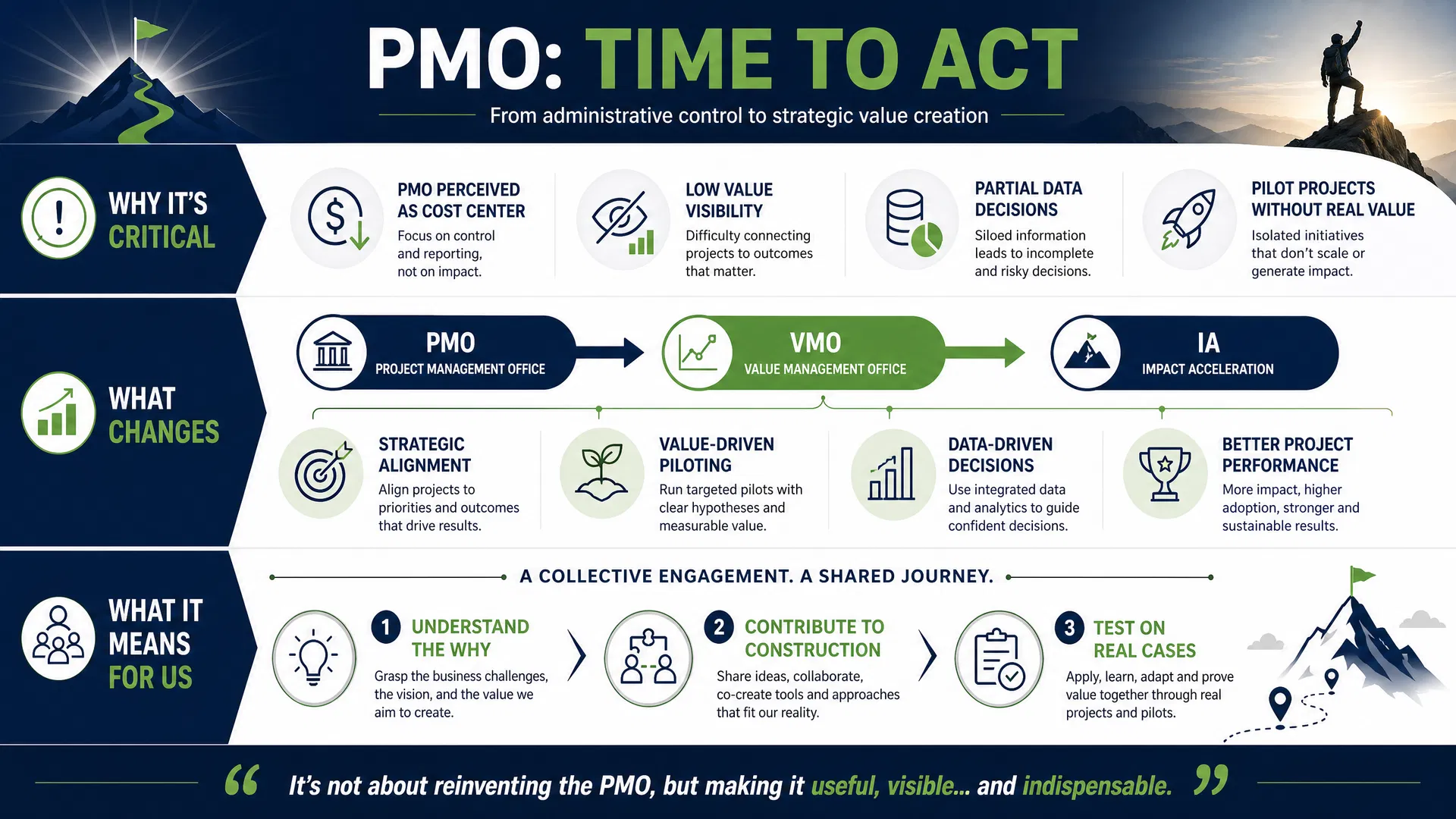
The idea that the PMO becomes the AI steering center within the organization is not a rupture but the logical conclusion of its evolution trajectory. Why is the PMO particularly well-positioned for this role?
Three Assets of the PMO for Steering AI
1. A culture of cross-functionality: The PMO is, by nature, a cross-functional function that interacts with all enterprise divisions. This posture is precisely what is necessary to govern AI initiatives that, by definition, cross organizational silos.
2. Mastery of project cycles: AI projects are projects like any other—they have scope, budget, risks, dependencies, and stakeholders. The PMO already possesses the skills to frame them, track them, and arbitrate them.
3. A strategic position for measuring value: One of the recurring challenges of AI projects is demonstrating their ROI and contribution to business objectives. The PMO transitioning toward the VMO possesses precisely the methodological framework to define, measure, and communicate this value.
A Collective Call to Action
The transformation of the PMO into an AI steering center is not an individual decision: it is a collective commitment. It requires that every actor in the organization understands the "why," contributes to building the new model, and concretely experiments with new practices.
"It's not about reinventing the PMO, but making it useful, visible... and indispensable."— Vision of PMO transformation
This transformation involves three concrete commitments: understanding the meaning of the approach, actively contributing to its construction, and testing on real cases to learn and progress continuously. It is an agile, iterative, and profoundly human approach—in service of a technology that, without this framework, will not produce the expected results.
Failing to evolve risks losing performance, credibility, and ultimately value. Organizations that equip their PMO with a clear AI mission and solid data governance will have a sustainable competitive advantage over those that treat AI as an isolated initiative without anchorage in their portfolio governance.
Key Competencies for This New Role
The PMO's rise toward this role as AI steering center implies a significant evolution in the competencies expected of teams. It is not about training data scientists or AI engineers but about developing a hybrid profile combining project management expertise, data culture, and strategic sensitivity.
Technical Competencies
Data culture: Understanding data quality, governance, and sovereignty challenges; knowing how to dialogue with data teams and IT departments.
Mastery of analysis tools: Using advanced dashboards, Business Intelligence tools, and progressively AI interfaces applied to portfolio management.
Knowledge of AI fundamentals: Understanding the capabilities and limitations of predictive models, automation tools, and generative AI.
Strategic Competencies
Value-oriented thinking: Knowing how to define, measure, and communicate value created by a project beyond traditional compliance indicators.
Prioritization capacity: Intelligently arbitrating within a portfolio by integrating multidimensional criteria (financial return, strategic impact, feasibility, risk).
Strategic alignment: Building and maintaining an explicit link between project initiatives and the organization's strategic objectives.
Behavioral Competencies
Transformation leadership: Carrying and embodying the cultural change necessary for adoption of value-driven steering.
Multi-level communication: Knowing how to speak to both project managers and general directors, adapting the level of abstraction and presented indicators.
Experimentation and agility: Adopting a continuous learning posture, testing, iterating, and improving without waiting for the perfect solution.
Conclusion
The question posed in the introduction—should the PMO become the AI steering center?—calls for a nuanced but resolutely affirmative answer. Not because the PMO should improvise itself as a technical AI expert, but because its cross-functional position, its mastery of project cycles, and its capacity to govern complex portfolios make it the best-positioned actor to orchestrate the steering of AI initiatives and measure their real value.
This evolution is not spontaneous. It requires a structured transformation journey—from consolidating fundamentals to acceleration through data and AI—as well as a profound change in posture: moving from controlling execution to generating impact. The PMO that succeeds in this transition becomes not only more useful; it becomes indispensable.
In a world where AI modifies the speed, nature, and criteria of decision-making, organizations that will have invested in a mature, value-oriented PMO equipped with robust AI governance will be better armed to navigate complexity, to prioritize high-impact investments, and to transform their strategic ambitions into tangible results. The issue is not whether the PMO must evolve. The issue is how quickly.
Key Takeaways
| Point | Description |
|---|---|
| PMO Evolution | From operational control to strategic value creation |
| VMO Role | Aligning portfolio with strategy and maximizing value |
| AI Integration | Enabling predictive steering and intelligent prioritization |
| Success Factor | Data quality, organizational maturity, and posture transformation |
| Competitive Edge | PMOs with clear AI missions and governance outperform isolated initiatives |
Reference :
- Project Management Institute (PMI). Pulse of the Profession 2024 : The Future of Project Work. PMI, 2024.https://www.pmi.org/learning/library/pulse-of-the-profession
- Gartner. Magic Quadrant for Project and Portfolio Management. Gartner Research, 2025.https://www.gartner.com/en/documents/project-portfolio-management
- Project Management Institute (PMI). Artificial Intelligence Innovating How Projects Get Done. PMI, 2024.https://www.pmi.org/learning/library/ai-innovating-project-management
- Kopmann, J., Kock, A., Gemünden, H. G., & Müller, R. "The Role of Project Portfolio Management in Fostering Both Deliberate and Emergent Strategy." International Journal of Project Management, 35(4), 557–570, 2017.https://doi.org/10.1016/j.ijproman.2017.02.011
- McKinsey Global Institute. The State of AI in 2025 : How Organizations Are Deploying and Governing AI at Scale. McKinsey & Company, 2025.https://www.mckinsey.com/capabilities/quantumblack/our-insights/the-state-of-ai
- Aubry, M., Müller, R., Hobbs, B., & Blomquist, T. "Project Management Office in Transition." International Journal of Project Management, 28(8), 766–778, 2010.https://doi.org/10.1016/j.ijproman.2010.05.006
- Association Francophone de Management de Projet (AFITEP). Guide du management de portefeuille de projets. AFITEP, édition 2023.https://www.afitep.fr